The Spanish technology centre CTAEX is leading Work Package 1, devoted to Feedstock (Upscale of crops, agrivoltaics, biomasses and pre-treatments). The main objective of the WP1 within the Sustainext project is to provide biomasses from different origins: rosemary from an agrivoltaics system; chamomile, rosemary and lemon verbena from tobacco disused fields; cardoon from the wastes of the flower harvest for PDO Torta del Casar and pomegranate and artichoke as by-products from food industry and olive mill wastes (leaves, water).
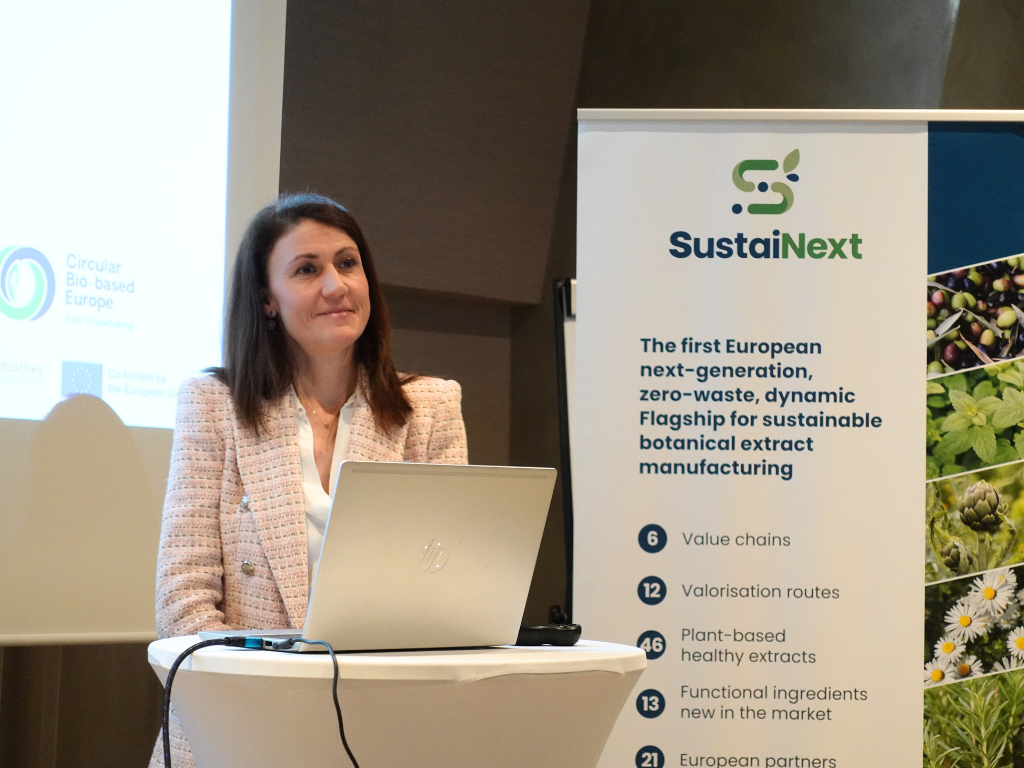
The two CTAEX researchers involved in SustaiNext are Lorena Zajara Serrano and Elena Ordiales Rey. Both have been working at CTAEX for the last 18 years, developing projects in the Agriculture department related to agronomic practices, adaptation or introduction of new crops, reduction of chemical pesticides using natural ones, new IT tools for agriculture, recovery of by-products and waste, agronomic characterisation of varieties.
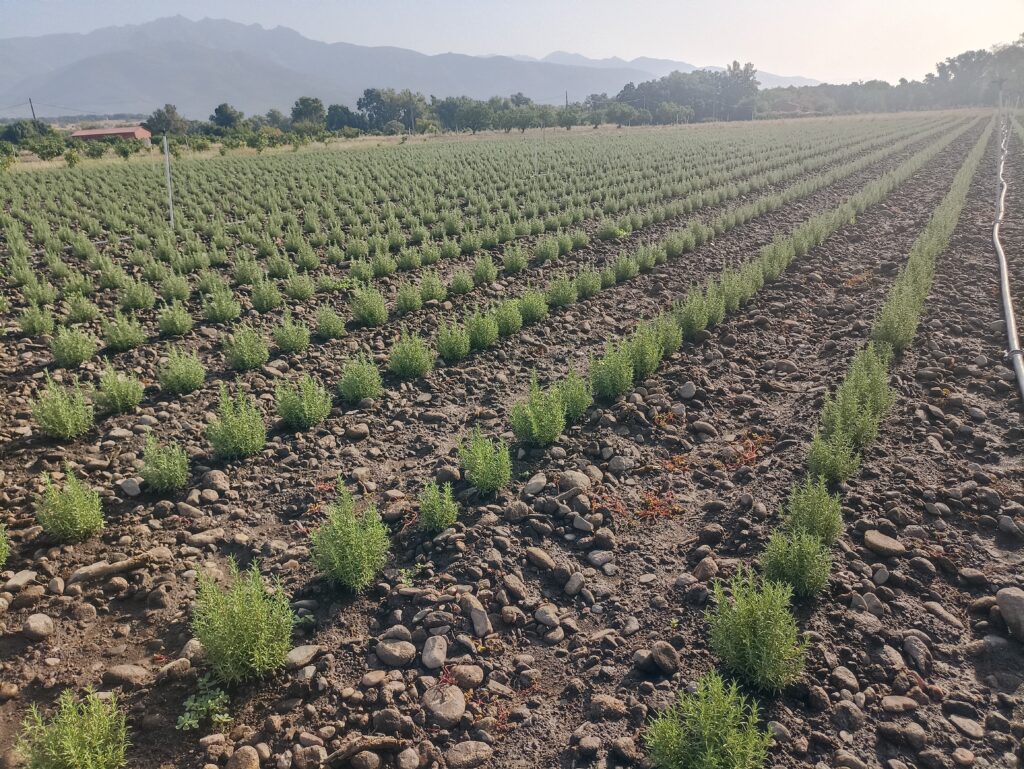
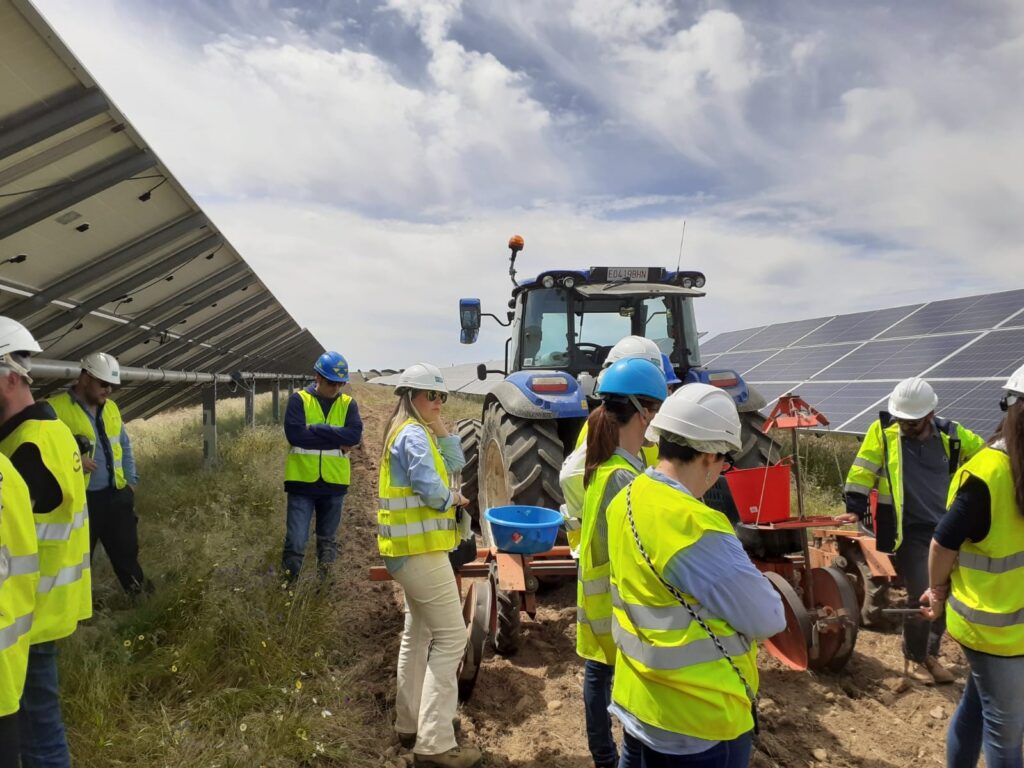
Lemon verbena and rosemary crops start to replace tobacco crops as a part of SUSTAINEXT.
Lorena is Responsible for Agriculture projects, and Elena is the Head of the Agriculture Department at CTAEX. It’s worth mentioning that Lorena is an expert in aromatic and medicinal plants and composting, while Elena is more specialised in crop fertilisation techniques.
The main challenge of WP1 is to supply the biomasses and to establish the crops and scale them up successfully. “Being the first time that some of them are implemented in the area and as a large-scale crop, there are some difficulties, such as mechanisation, adaptation of the crop cycle, crop management, possible incidences of pests and diseases, etc”, explains Elena Ordiales. “Our main achieved milestone within this first year of project is to have 3 crops established: rosemary in agrovoltaic system (4 has) and in disused tobacco field (1,7 has), lemon verbena (2,5 has), cardoon (0,17 has). Some of the crops, such as chamomile or cardoon, have been delayed due to the weather, and abundant rainfall during autumn, winter and spring.
Aromatic and medicinal plants are an attractive alternative to traditional crops in Extremadura due to their low water, fertiliser and pesticide requirements and their hardiness. They are also an excellent soil rotation, as they have not been cultivated intensively in the region until now.
“Many of these species are well adapted to the soil and climatic conditions of Extremadura, but the organisation of an aromatic and medicinal plants sector is still needed”, says Elena. “In general, the project has been well received because a revulsive was needed to finally create a sector of aromatic and medicinal plants in Extremadura and this could be the opportunity. SustaiNext will allow new crops to be grown under new conditions and, although cautiously due to the risks involved in any new crop, stakeholders see a good alternative to traditional crops”, she states.
Thanks to the SustaiNext project, the cultivation of rosemary, lemon verbena and thistle, for example, will be scaled up to several hectares for the first time in the area, since until now only smaller plots had been cultivated as part of R&D&I projects.
“This is an important step forward because it will lead to progress in the knowledge of mechanisation problems, adaptation of cultivation techniques, etc., which will help to stabilise the crops, and therefore the future aromatic and medicinal plant sector”, Elena explains.
One of these innovations involves shifting from solar photovoltaics to agrovoltaics. Extremadura is the Spanish region with the highest installed solar PV capacity, which has intensified competition for land use and associated increased carbon emissions from land use change. Agri-power has emerged as a sustainable model, capable of combining clean and affordable electricity production and agricultural production.
“Agrivoltaics is a system that allows the cultivation of crops on the surface of photovoltaic plants. In previous projects developed by two SustaiNext partners, ENDESA and CTAEX, it has been demonstrated that it is possible to grow some species in this system, such as rosemary. In this sense, this system can contribute to alleviating the problem of competition for land for agricultural use, although at present there are still legislative problems to reach this point”, says Elena.
As mentioned before, one of WP1 tasks is to provide biomasses from different origins, which requires different pre-treatment processes:
“Each biomass must be treated following a specific process to get the maximum yield from each of them. Among the pre-treatments foreseen for WP1 biomasses, drying stands out, being necessary to define the conditions to preserve the compounds of interest in each case. Other pre-treatments include grinding, pasteurisation, micronization, cleaning, microfiltration and even enzymatic hydrolysis depending on each biomass”, she concludes.
Meet our partners: CTAEX
CTAEX is a national technology centre, located in Badajoz (Extremadura, Spain), which focuses its activity on carrying out R&D projects for companies in the agri-food sector. Its activity focuses on two main areas: agriculture and food, which in turn are structured around sustainability and digitalisation, among others. It works at regional, national and international level, under contract or participating in public calls for proposals, either as a subcontractor or as a beneficiary.