The Spanish platform Kómoda News published in September an article by José Carlos Quintela, scientific director and co-founder of Natac Natural Ingredients, on the objectives and benefits of the SustaiNext project.
José Carlos Quintela holds a degree in Pharmacy from the University of Santiago de Compostela and a PhD in Biological Sciences from the Autónoma University of Madrid. He has participated in more than 40 research projects related to natural products, published more than 60 scientific articles and is the author of four research patents. Kómoda News is a platform for content related to health, nutrition, lifestyle and well-being that creates a space for professional voices to contribute to a better understanding of these areas and a reflection based on balanced and contrasting sources.
Article: Sustainable production of plant extracts
In recent years, the demand for natural and healthy ingredients has grown significantly, driving the industry to look for more sustainable and environmentally friendly production methods. However, the plant-based ingredients sector is still largely dominated by manufacturers operating with processes designed in the past: linear, single-product, energy-intensive systems. In these traditional models, raw materials are processed in a standardised way, without taking into account their specific characteristics, to obtain a single product, with the rest of the biomass being discarded as waste.
Although there has been some progress towards more sustainable models, the real challenge lies in adopting a holistic approach that encompasses all stages of the production process, from the collection of raw materials to the final delivery to users. This is where the industry faces a challenge, as it needs to balance the growing demand for healthy ingredients with more sustainable production practices.
In this context, SustaiNext arises, as it proposes a disruptive solution by transforming the production of plant extracts into a completely innovative and sustainable process. Natac is a company that researches, develops, manufactures and markets healthy ingredients of botanical origin, its speciality plants such as olive, artichoke or pomegranate, all of them closely linked to our Mediterranean origin.
For Natac, sustainability is not just another component, but a fundamental part of its corporate identity, being committed to achieving a production model that not only minimizes its environmental impact but also generates shared value with society and local communities. SustaiNext represents the evolution of this commitment, offering a production approach that benefits both the climate and society as a whole, creating a positive and lasting impact.
A sustainable, zero-waste production model
The SustaiNext project’s ultimate goal is to transform Natac’s production plant in Hervás, in order to carry out a more advanced, digital, innovative and sustainable production of plant extracts, unique in the world. This transformation will also position the region of Extremadura at the forefront of the sector globally. This ambitious project is funded by the European Commission’s framework programme Horizon Europe, and specifically by the Circular Bio-based Europe Joint Undertaking (CBE JU), whose mission is to make Europe a world leader in circular bioeconomy, promoting the transition towards climate neutrality set out in the European Green Pact.
SustaiNext is part of the so-called Flagship projects, whose purpose is to promote the creation of large innovative industrial facilities that serve as an example and inspiration for European industry. Through this project, a dynamic, disruptive, intelligent and multi-product biorefinery will be developed that will revolutionise the plant-based ingredients sector. This pioneering model will extract maximum value from the processed biomass through an optimal cascade use of the feedstock, with a firm commitment to achieving ‘zero waste’ and ‘zero pollution’ operations. The result will be a biorefinery that will significantly improve its environmental performance, achieving maximum efficiency in the use of resources and energy.
La valorización de la biomasa agroalimentaria representa un desafío significativo para Europa, y especialmente para la región de Extremadura
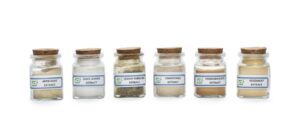
The success of this model is based on the integration of the entire supply chain, from the procurement of raw materials to the arrival of the product to the end users, applying an innovative circular approach. This approach is based on the implementation of a dynamic and intelligent analytical biorefinery (DYANA), capable of optimising each production process according to the initial composition of the biomass. In this way, maximum use is guaranteed with the lowest possible environmental impact, improving the efficiency of resources and reducing emissions. Thanks to this model, the complete valorisation of raw materials will be achieved, with the aim of reaching zero waste and zero emissions. In addition, SustaiNext will bring 46 new healthy ingredients of plant origin to the market, reinforcing its commitment to sustainability and health.
Key innovations: Upcycling and use of agri-food biomasses
One of the main pillars of the SustaiNext project is the upcycling or suprarecycling of these agri-food biomasses, an innovative approach to transforming agricultural waste into high-added-value ingredients, promoting a more efficient and sustainable production model.
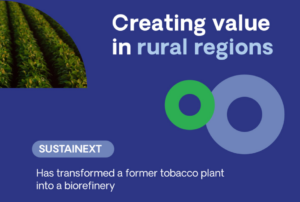
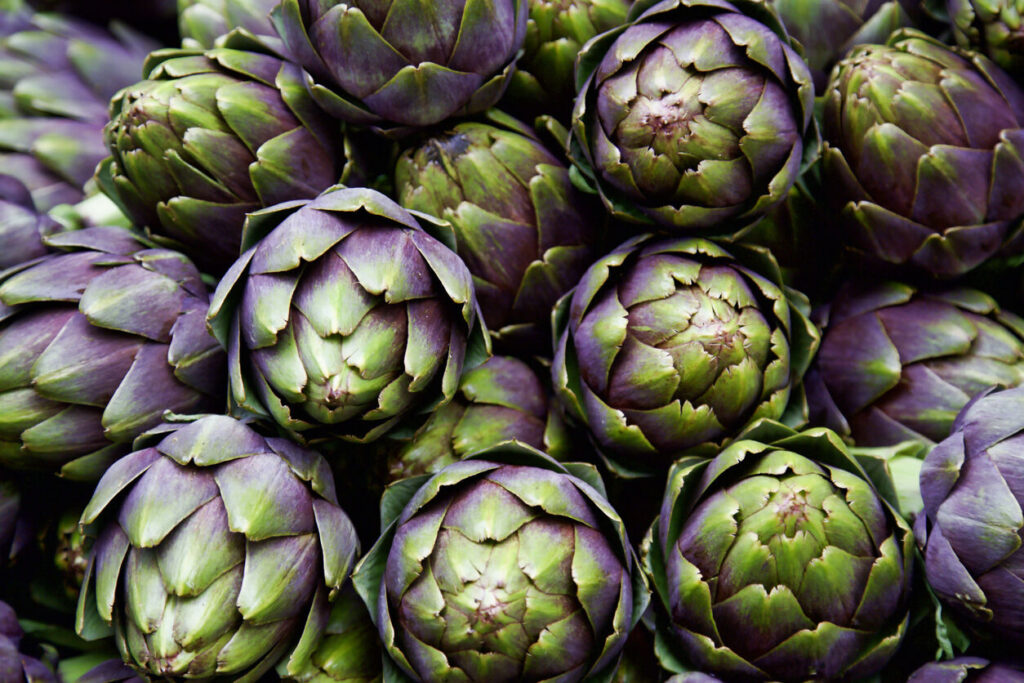
SustaiNext will focus on harnessing agri-food biomasses such as olive, artichoke, wild thistle and pomegranate, all plants linked to the Mediterranean ecosystem, to produce natural and healthy ingredients. In this sense, the project will also promote the cultivation of Aromatic and Medicinal Plants (MAP), which is presented as a viable and profitable alternative to the tobacco industry, a sector in decline in the Extremadura region. This will provide new economic opportunities for local farmers while facilitating the transition to more sustainable and socially accepted crops.
La innovación tecnológica y el compromiso con la sostenibilidad pueden transformar por completo el sector de los ingredientes de origen vegetal
In addition, SustaiNext will face another critical challenge related to the growing demand for agricultural land due to the expansion of photovoltaic energy in Extremadura. To address this challenge, the project will implement the cultivation of PAMs in solar farms under an innovative agri-voltaic model, which combines renewable electricity production with agriculture. This approach not only optimises land use but also allows for a harmonious coexistence between clean energy production and sustainable agriculture.
With these innovations, SustaiNext aims to maximise the value of underexploited agri-food biomass, contributing to the transition towards a circular production model that not only generates economic benefits but also has a positive impact on the environment and rural communities.
With SustaiNext, Extremadura is positioning itself as a benchmark in the transition towards a circular bioeconomy, showing how technological innovation and commitment to sustainability can completely transform the plant-based ingredients sector. This pioneering project will be an inspiring example for the European bioindustry, demonstrating that it is possible to achieve a zero waste and zero pollution model through a disruptive and integrated approach.
This project will not only bring economic and social benefits to the region but will also serve as a replicable model for other parts of Europe, helping to consolidate the European Union as a leader in the circular bioeconomy. With the development of new technologies, the full valorisation of biomass and a strong focus on energy efficiency, SustaiNext marks a turning point in the way natural ingredients are produced, demonstrating that sustainability is not only possible but is the future of industrial production.